
news@yourcompany.com. Before Twenty can send from it, Gmail, Outlook, and other providers need proof that you own the domain. You add that proof as DNS records where your domain is managed.
You will create the address in Twenty, add the DNS records, then verify them.
Twenty’s records use their own host names, such as
twenty-bounce.yourcompany.com and unsubscribe.yourcompany.com. They do not
change the records your day-to-day email relies on, so you can use your main
domain. The only exception is DMARC, which applies to the whole domain.
Twenty suggests it only when you do not already have one.Before you start
Before you start, make sure you have:- Access to your DNS provider: the company where you manage your domain records, such as Cloudflare, GoDaddy, or Namecheap. This is not always the company you bought the domain from.
- The Workspace settings permission in Twenty.
Part 1: Create the address in Twenty
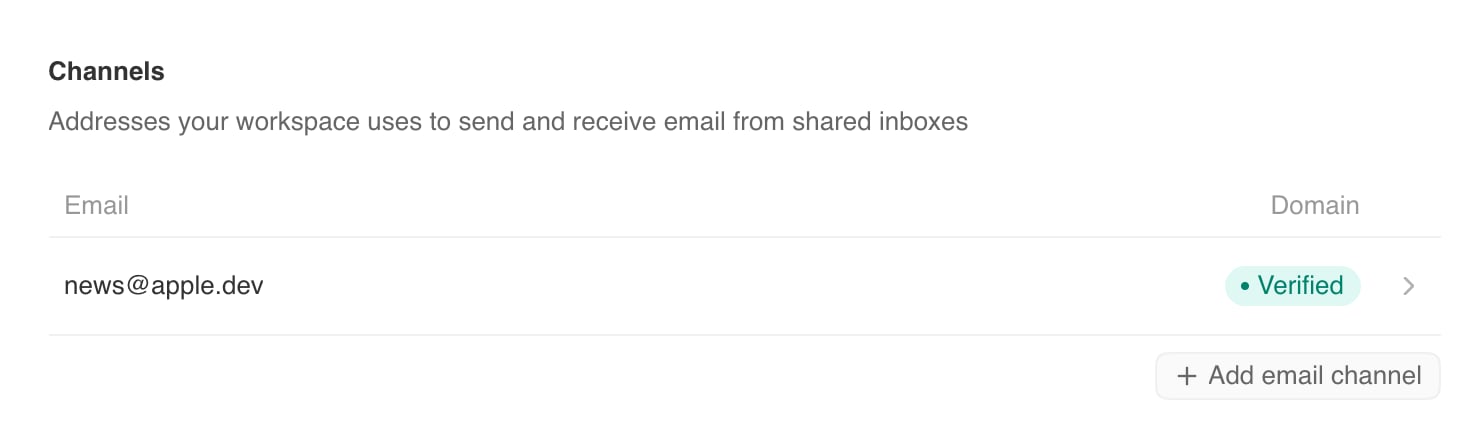
The sending domain comes from an email channel. If you already set up a shared inbox in Twenty, the domain is already there. Skip to Part 2.- Go to Settings → Communication.
- Click Add email channel.
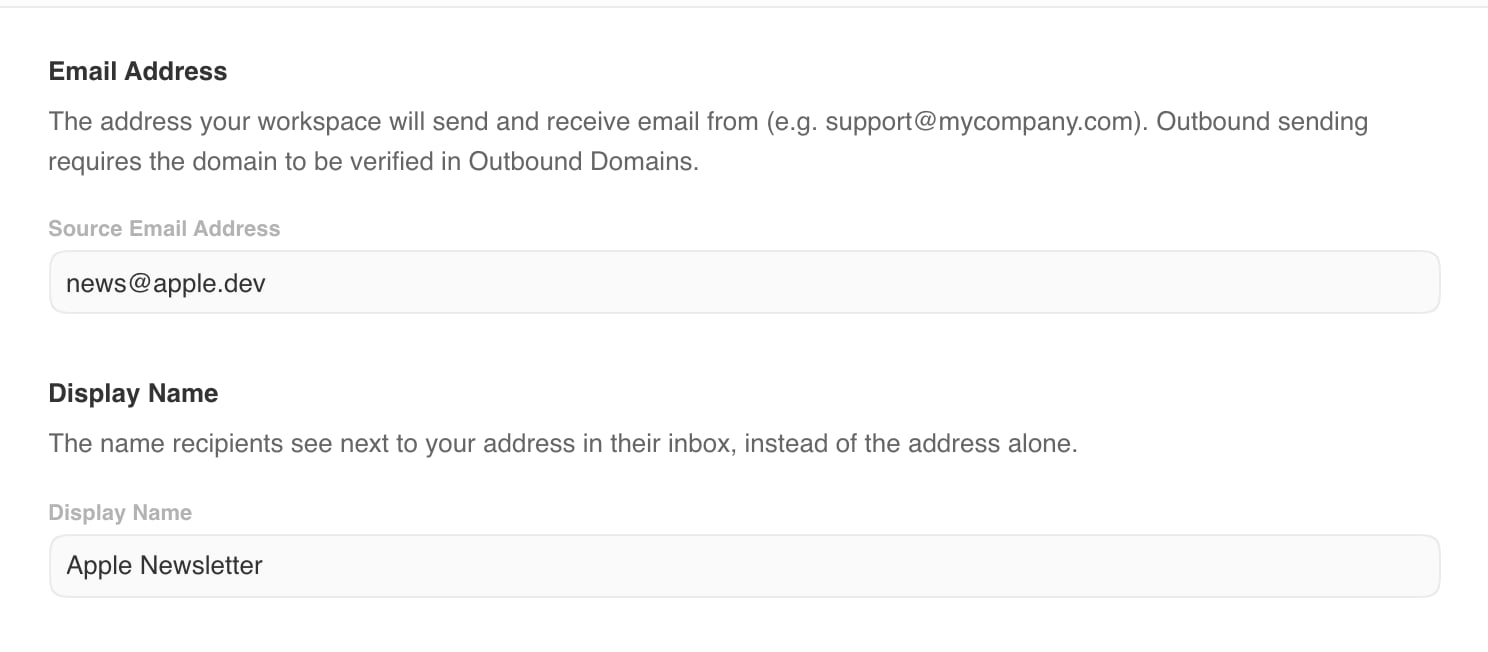
- In Source Email Address, enter the address you want to use, for example
news@yourcompany.com. Twenty uses the part after@as the sending domain. - In Display Name, enter the name people see in their inbox, for example
Acme Newsletter. - Click Save.
A domain can only be verified in one Twenty workspace. Twenty tells you if it
is already being used elsewhere.
Part 2: Understand the records
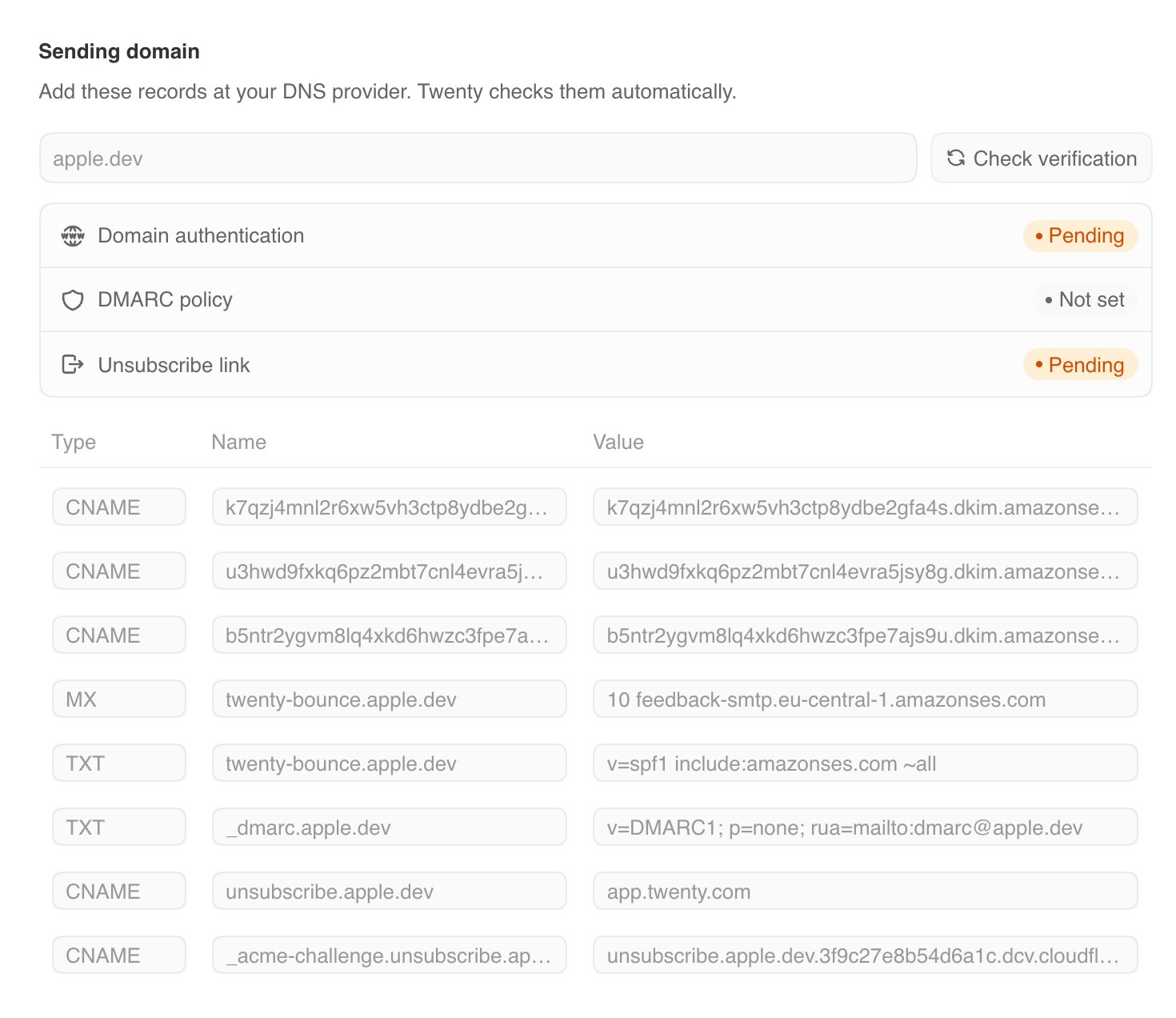
Add every record Twenty shows. Gmail, Yahoo, and Outlook reject bulk email that is not authenticated.
Part 3: Add the records at your DNS provider
For each record, add a new entry at your DNS provider and copy these values from Twenty:- Type:
CNAME,MXorTXT. - Name: sometimes called Host.
- Value: sometimes called Target, Points to, Content, or Answer.
MX record, Twenty shows the priority before the value, such as 10 feedback-smtp.eu-central-1.amazonses.com. Most providers have a separate Priority field. Put 10 there and the rest in the value.
Follow your provider’s instructions, using the values from Twenty:
If your provider is not listed, look for DNS, DNS records, Zone editor, or Advanced DNS in your domain settings.
Part 4: Verify
Twenty checks your records every hour. To check now, click Check verification in Sending domain. DNS changes usually work within an hour, but some providers take up to 48 hours. The domain moves from Pending to Verified when Twenty finds the authentication records. The Unsubscribe link also needs to show Verified before you can send campaigns.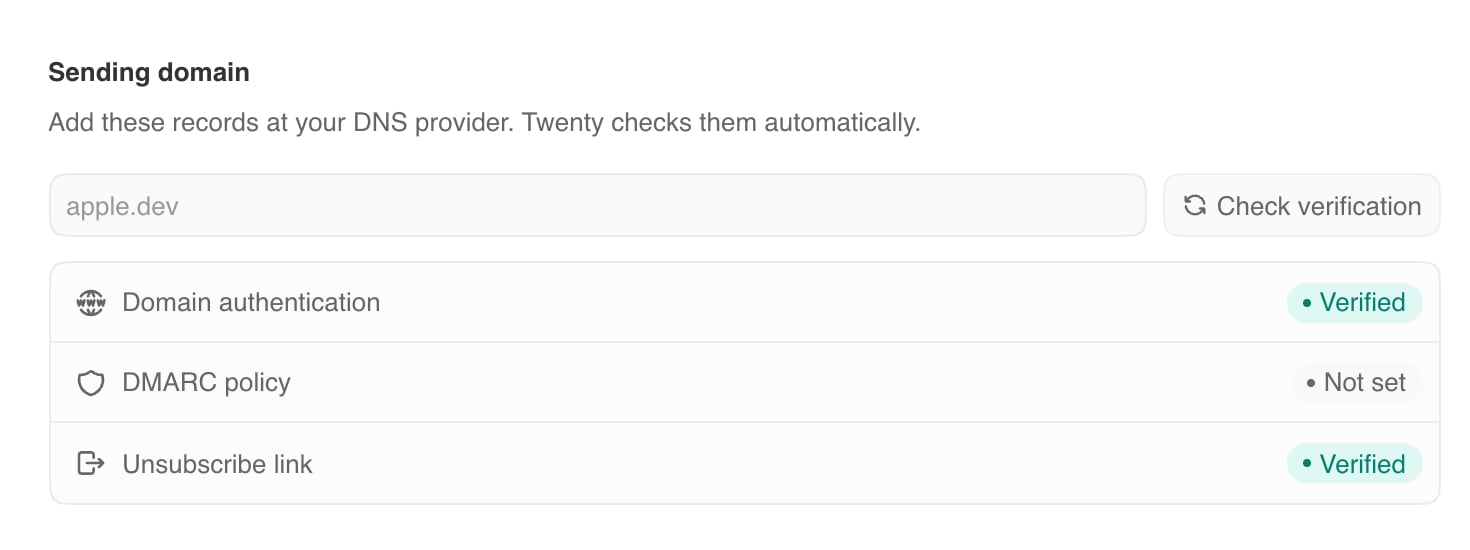
Troubleshooting
The domain stays Pending for hours
The domain stays Pending for hours
Open your DNS provider and compare each Name with the value in Twenty.
The usual problem is that the provider added your domain a second time, as
described in Part 3. Also check that you added the records where your DNS is
actually hosted. Records in your registrar’s panel do nothing if your name
servers point somewhere else.
Cloudflare: the records are there but never verify
Cloudflare: the records are there but never verify
Set every
CNAME to DNS only. With the orange cloud on, Cloudflare
returns its own servers instead of the value Twenty gave you.The domain shows Failed
The domain shows Failed
Twenty stops checking a failed domain. Fix the records, then click Check
verification.
The domain shows Temporary Failure
The domain shows Temporary Failure
Your DNS provider did not answer when Twenty checked. Twenty keeps checking
every hour, so this usually fixes itself.
Authentication is verified but the Unsubscribe link stays Pending
Authentication is verified but the Unsubscribe link stays Pending
The two unsubscribe records are checked separately and can take longer because
Twenty also creates a secure certificate for them. Check that both
CNAME
records exist—on unsubscribe and _acme-challenge.unsubscribe—then wait up
to an hour.My provider rejects the MX record
My provider rejects the MX record
Put
10 in Priority and only the host name in the value, such as
feedback-smtp.eu-central-1.amazonses.com. Do not put 10 in the value.